*petting my cat* please cure my depression
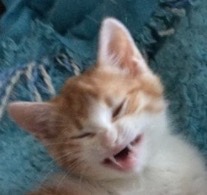
cat: *prrbhbphr*
me: thanks
that’s actually a cat thing though, I don’t know the actual scientific facts behind it but cats can ‘sense’ if you will when someone is sick or not themselves and they will press themselves tightly against whoever or whatever is hurting and purr and something about the frequency of the vibrations of them purring acts almost like healing or pain relief and comfort, so essentially, cats will try to purr you better
tru i remember when i had 1 of my first panic attacks i was at my friends house (she has 3kitties) and my heart was pounding & her oldest cat who never gave me any attention b4 came and sat on my lap and purred until i chilled tf out..so i am a firm believer in Cat Therapy 👌
When I was little and got upset or panicked, my cat would curl up on my chest and purr and stick his head under my chin. I think that’s the main reason I love cats so much. He was the only thing at the time that could comfort me. RIP, Thomas. 😸
My cats do a similar thing, my youngest cat isn’t one for interaction and will generally crawl under my bed and sleep but whenever I’m having a really bad day and I’m curled up in bed she’ll always lay as close as possible and just purr. My older cat will physically force himself under the covers to get as close as possible when he can sense someone is upset and he usually stays there all night
Actually, for us, tech week wasn’t horrible, at least when it came to the actual tech part. In the past it’s been awful so this was a welcome relief. But there were a few technical mishaps here and there…
It took us a long time to get the sound effects for the cart crash right. A ridiculously long time. Honestly, I’m still not sure how or IF we managed to pull off that scene, because I don’t think I ever actually saw it.
Us gals had to sing the chain gang part of the prologue backstage, which meant we had to have our mics turned on for that. Usually it worked fine. Unfortunately, there was one time that Enjolras’ mic didn’t get turned OFF again, so we briefly had her disembodied voice interrupt part of the prologue. 😬 Whoops.
One of the guns from the barricade was left on the bridge through the end of the second act, which wouldn’t be a huge problem because the audience couldn’t see it, but during the wedding we were waltzing up there. We had to avoid tripping on it or accidentally kicking it off the bridge, which is more difficult than it sounds.
For a long time, we didn’t have the transition after Fantine’s death completely worked out, so for a while Fantine had to carry on and off her own bedding, and she really just does everything around this house huh
Poor Enjolras! During the final battle she’s supposed to die waving the flag, but on the opening performance it just… wouldn’t unfurl… Bless her heart, she tried so hard to get it open, but eventually had to give up and settle for a pitiful little red triangle on a stick. She says she’ll be bitter about it until her dying day, but honestly, it added a level of patheticness to the scene that actually wasn’t too detrimental to the story.
I think I already mentioned this, but I (a fool) decided to wear slightly-too-big flats during Lovely Ladies and kicked one of them halfway across stage?? I don’t know how noticeable it was but I had to spend the rest of our dance number trying to covertly get it back on
That one rehearsal where Feuilly’s shoes were untied during The Beggars and he almost tripped down the stairs
During The Confrontation, Valjean is supposed to break off a chair leg and use it to threaten Javert or whatever. We had it set up so that the leg could be taken off and replaced without issue, but during the second to last performance he actually broke the chair
Setting up the barricade was such a hassle. Most of it was unattached furniture pieces, so they had to be carried on and off individually, and that was a lot easier said than done. Luckily we got a set routine established by the time opening night rolled around.
The mug Grantaire used during “Red and Black” didn’t have a bottom for some reason, so one rehearsal where we were blocking that, Enjolras sings the line “Don’t let the wine go to your brain!” Grantaire just held it up and said “I’m not even drunk”
I told you all about the freaking grapes, right? From The Beggars? It was the ask before this I think idk but that was a m e s s
It wasn’t really a tech thing, but during dinner one night the table broke and spilled our salads all over the floor
And of course, as rehearsals get later, the cast gets more and more sleep deprived and slap-happy, but I feel like that’s a topic for a completely different post.
Hope that helps some! Best of luck to you and your cast!! Even when things go wrong (because they will), you can still have a great show. You’ve got this!
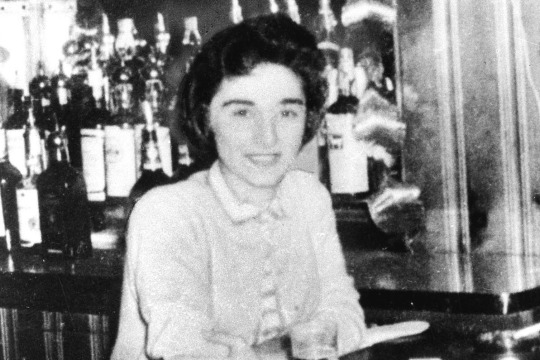
I was told by my professors that Kitty Genovese was a 28-year-old unmarried woman who was attacked, raped, and brutally murdered on her way home from her shift as manager of a bar. I was told that numerous people witnessed the attack and her cries for help but didn’t do anything because they “assumed someone else would”. Nobody intervened until it was too late.
Now… is it likely that people overheard Kitty’s cries for help and ignored them because they thought someone else would deal with it? Or, perhaps, did they ignore her because they knew she was a lesbian and just didn’t care?
Maybe that’s not the case. Maybe it was just a random attack. Maybe her neighbours didn’t know she was gay, or didn’t care.
But it’s a huge chunk of information to leave out about her in a supposedly scientific study of events, since her sexuality made her much more vulnerable to violent crimes than the average person. And it’s a dishonour to her memory.
RIP Kitty Genovese. Society may only remember you for how you died, but I will remember you for who who were.
this was one of the first lessons I had in psych too and we were never told about this either nor was it in any of the reading materials
I never knew this.
I also never knew this about Kitty Genovese, but I do know that, in fact, many of the dozen (not thirty-eight) people who witnessed some part of the attack (which took place after 3AM, on a chilly night in March when most people’s windows were closed) tried to help in some way.
One shouted out his window for the attacker to leave her alone, which did successfully scare the man off temporarily.
Another called the police but, seeing her still on her feet, said only that there had been a fight but the woman seemed to be okay.
And when Kitty Genovese was finally attacked in a vestibule where she couldn’t be seen from outside, Karl Ross, a neighbor, saw what was happening but was too frightened himself to go to her rescue–so he started calling other neighbors to ask what he should do. Eventually one of them told him to call the police, which he did, and the woman he called, Sophie Farrar, rushed out to help Kitty even though she didn’t know whether the attacker was gone.
Kitty Genovese died in the arms of a neighbor who tired to help and comfort her while they waited for the police and ambulance to arrive. Kitty was in fact still alive, although mortally wounded, when the ambulance reached the scene.
The man who saw the final stabbing? Who panicked and called other neighbors first instead of the police? The man who said, infamously, that he “didn’t want to get involved” because he was reluctant to turn to the police for help? He was thought to be gay himself. He was a friend of Kitty and Mary Ann’s. After being interviewed by the police he took a bottle of vodka to Mary Ann and sat with her, trying to comfort her.
So, no. I don’t think the evidence indicates that Kitty Genovese’s neighbors let her die because she was a lesbian, because Kitty Genovese’s neighbors tried to help.
(Also, going by the content of the murderer’s confession, it was indeed a random attack.)
how on EARTH was this “scientifically” studied but the details gotten so wrong and the wrong as hell conclusion published and taught in schools?!?!?! where were those scientists observation skills?! on vacation?!
How to take facts and turn them into an urban legend that gets taught in schools: Make a bad made-for-t.v.-movie about it, watch it, believe everything the movie says, annnnnnnd go! That’s how it gets taught as this supposed “scientific study.” Someone got fucking lazy.
Shoutout to any trans friends that’ll be misgendered by family during this holiday season. You’re strong and you’ll get through this. I love you and wish you the best.
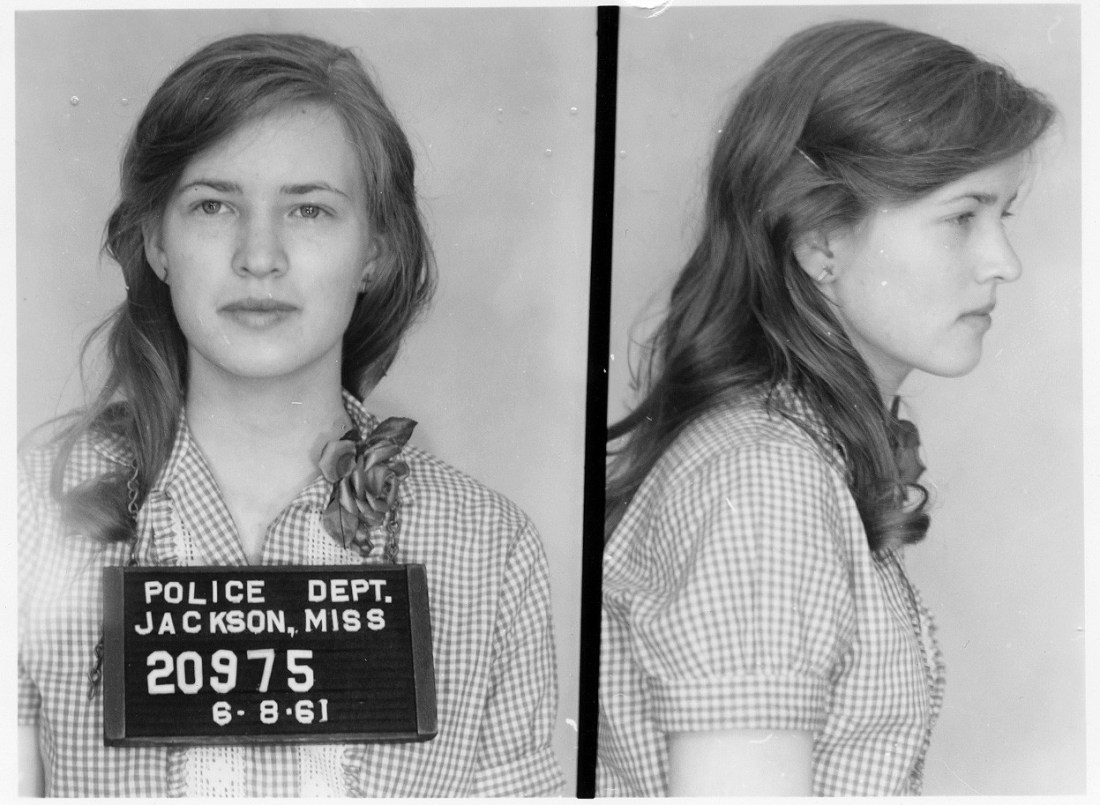
Mugshot of a teenage girl arrested for protesting segregation, Mississippi, 1961.
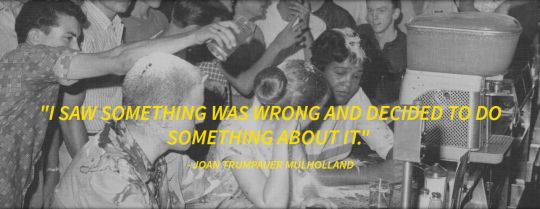
Her name is Joan Trumpauer Mulholland. Her family disowned her for her activism. After her first arrest, she was tested for mental illness, because Virginia law enforcement couldn’t think of any other reason why a white Virginian girl would want to fight for civil rights.
She also created the Joan Trumpauer Mullholland Foundation. Most recently, she was interviewed on Samatha Bee’s Full Frontal on February 15 for their segment on Black History Month.
Don’t reduce civil rights heroes to “teenage girl”.
Her great-grandparents were slave owners in Georgia, and after the United States Civil War, they became sharecroppers. Trumpauer later recalled an occasion that forever changed her perspective, when visiting her family in Georgia during summer. Joan and her childhood friend Mary, dared each other to walk into “n*gger” town, which was located on the other side of the train tracks. Mulholland stated her eyes were opened by the experience: “No one said anything to me, but the way they shrunk back and became invisible, showed me that they believed that they weren’t as good as me. At the age of 10, Joan Trumpauer began to recognize the economic divide between the races. At that moment she vowed to herself that if she could do anything, to help be a part of the Civil Rights Movement and change the world, she would.
In the spring of 1960, Mulholland participated in her first of many sit-ins. Being a white, southern woman, her civil rights activism was not understood. She was branded as mentally ill and was taken in for testing after her first arrest. Out of fear of shakedowns, Mulholland wore a skirt with a deep, ruffled hem where she would hide paper that she had crumpled until it was soft and then folded neatly. With this paper, Mulholland was able to write a diary about her experiences that still exists today. In this diary, she explains what they were given to eat, and how they sang almost all night long. She even mentioned the segregation in the jail cells and stated, “I think all the girls in here are gems but I feel more in common with the Negro girls & wish I was locked in with them instead of these atheist Yankees.
Soon after Mulholland’s release, Charlayne Hunter-Gault and Hamilton E. Holmes became the first African American students to enroll at the University of Georgia. Mulholland thought, “Now if whites were going to riot when black students were going to white schools, what were they going to do if a white student went to a black school?” She then became the first white student to enroll in Tougaloo College in Jackson, where she met Medgar Evers, Dr. Martin Luther King Jr., Reverend Ed King, and Anne Moody.
She received many letters scolding or threatening her while she was attending Tougaloo. Her parents later tried to reconcile with their daughter, and they tried to bribe her with a trip to Europe. She accepted their offer and went with them during summer vacation. Shortly after they returned, however, she went straight back to Tougaloo College.
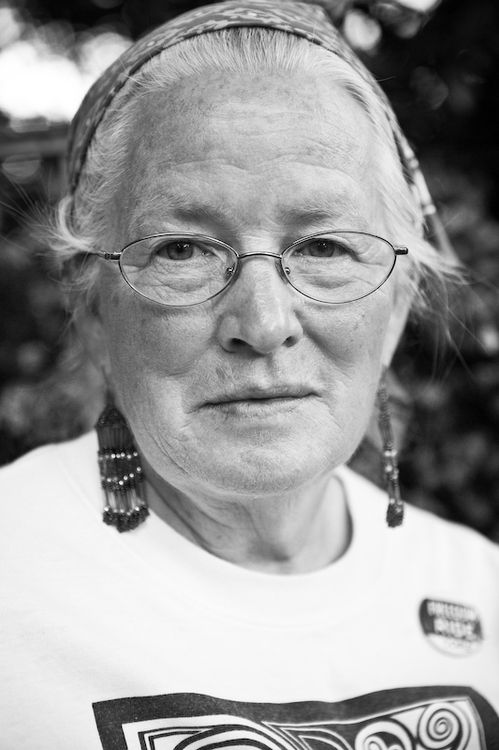
She ultimately retired after teaching English as a Second Language for 40 years and started the Joan Trumpauer Mulholland Foundation, dedicated to educating the youth about the Civil Rights Movement and how to become activists in their own communities.
I watched a YouTube video once (by a guy who’s name escapes me) about the importance of making sure the stories of white activists are told. His point was that it’s not about lavishing praise on them just because they were white and “woke”, it’s about letting other white allies see that others have come before them who were willing to sacrifice and do the hard work. This way they can see themselves in someone and realize that destroying inequality isn’t a fringe interest or just an “us vs. them” issue. It has to be ALL OF US.
That last comment is important. Don’t tell stories like this to say “Gee, aren’t white people great?”. Tell them to say “See what s/he did back in the day? Step up your fucking game, modern day white people.”


 ¯_( ಠ_ಠ)_/¯