the US is unreal like girls cant wear shorts to school, you can literally lose your job for being gay, and unarmed black children are brutally murdered on the regular but old white ppl r still like “what a beautiful country. i can freely carry a gun for no reason and some of our mountains look like presidents. god bless”
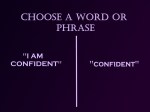
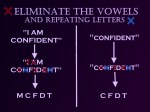
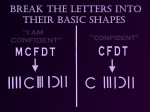
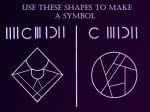
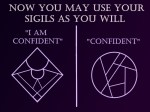
I don’t really know what people generally call this method of sigil making, so I’m just calling it “Letter Shaping” because you’re using the basic shapes from certain letters. This is the most common form of sigil making, and it allows the most creative influence. As you see above the sigils are for nearly the same thing, yet the sigils came out completely different. Not because the purpose was different, but because I approached them both a different creative way, and that’s what I like so much about this method. There’s a lot of freedom and personalization involved.
i think if there’s one thing that we often times forget is that: being kind is a matter of choice. yes, we all get torn between doing what is convenient and what is right. yes, i get tired of giving my hand to the people in need sometimes. yes, we all doubt the goodness in us sometimes. yes, being kind feels exhausting at times. but trust me, it happens to everyone and that’s okay. the only thing that matters is what you choose. and i hope you will always choose kindness- choose kindness not only for your neighbors but also for yourself.
Like the thing about Loki in Norse mythology is there’s like 8000 myths about Loki just being chaotically mischievous and the other gods are like lol oh that scamp, no matter how disastrous his schemes are, their reaction is still pretty much always ‘haha oh that’s just Loki.’
EXCEPT for basically….one myth. Where Loki’s instrumental in the death of Baldur and the gods are all WHOA TOO FUCKING FAR DUDE and send him to Hel to be tormented for all eternity, leading to his ultimate escape/release in Ragnarok to end all things and lead the army of the damned and his monstrous children to pretty much…eat all the gods, destroy Asgard, and burn the World Tree all to the ground so it can all start over.
Here’s the thing though. Norse mythology spanned centuries. The tales of Loki as the mischievous trickster god were told for centuries.
However, for most of that time, the myths were told as part of oral traditions passed down generation to generation, until they were finally compiled in manuscript form in the 13th century, roughly. This is when pretty much all the sagas, as Norse myth compilations were called, are considered to have been written down for the first time, and so they included thousands of stories that had been told over hundreds of years.
They were also regional, though there was a lot of overlap, given that the Vikings traveled widely and regularly across the various parts of Scandinavia. Still, different parts of Scandinavia had their own sagas. Norway had different sagas than Denmark who had different sagas than Iceland, etc. Even though all of them featured primarily the same figures, they each had their own unique stories featuring the gods. However, very rarely did they have radically different takes on those gods.
Now what’s significant about the fact that pretty much every saga we have, where these myths were all finally written down and preserved, is from the 13th century….
Is that pretty much all of Scandinavia had converted to Christianity by the early 12th century, with active worship of the Norse gods being scattered and mostly underground from that point on.
Why is this significant?
Because it means every Norse myth we have a written recording of was not written by people who still actively worshiped those gods. Nor were they intended to be read as such at the time.
They were written down by Christian scholars who wrote them AS stories. They were intended as collections of their regions’ cultural histories, but not by or for people who still actively believed in these stories or the figures they featured. They weren’t like….TRYING to be super accurate, is the thing. The scholars who wrote these sagas were writing down the stories that had been passed down for generations, but through the lens of people who saw them as stories their ancestors once believed, not ones that pertained to their own current worldview.
And they were writing these sagas for an audience of people who similarly believed as they believed.
Which means that inevitably, some things got ‘adjusted’ to fit the current world view, the zeitgeist of the scholars writing down the stories and that of the people who would read or have the stories read to them from thereon. Because again, they weren’t aiming for being 100% faithful to the tales as they’d been told to them. They were just treating them as stories. And what do you do when the story you’re writing down has elements that don’t make that much sense to you because they were born of and aimed a worldview that doesn’t match yours?
Well, if you’re the Christian scholars writing the Norse sagas, you ‘tweak’ those elements until they make a story that fits your worldview.
So remember how I said the various sagas were regional and had a lot of overlap but some stories were distinct to some regions and didn’t show up elsewhere?
Yeah, Ragnarok is one of those.
Thousands of sagas encompassing centuries of Norse mythology and oral traditions were written down all over the various regions of Scandinavia in the 13th century.
Ragnarok only showed up in one.
The most famous, granted, but still. Everything we’re told in Norse myths about the death of Baldur and Loki’s role in it, leading to his punishment and torment in Hel and his ultimate release and bringing forth the armies of Hel to slay the gods and end the world?
Comes from the Prose Edda and the later Poetic Edda, from Iceland.
Which had primarily converted to Christianity as far back as 1000.
Now, the Vikings? Were actually surprisingly not a big doom and gloom people. Pretty much every assumption of them as such comes from how synonymous we regard Ragnarok with their culture.
It is after all, the ultimate Judgment Day myth, isn’t it? Right up there with Christianity’s Book of Revelations. An apocalyptic end of the world scenario, a war between heaven and hell, where everything is destroyed so that the world can basically start fresh with a clean slate. Nothing old ‘deserves’ to survive, pretty much the only way for a world free of sin and evil to arise is from the ashes of the old, after everything has been cleansed with fire.
Now contrast this ‘myth’ with pretty much every other Norse myth that’s survived. Larger than life tales of grand adventures, noble quests, gods walking among mortals in disguise and heroes fighting giants and stealing from dragons.
Where the closest thing the Norse pantheon has to a devil figure is Loki, the god of mischief….not even evil, but MISCHIEF, because a far more accurate representation of the Vikings’ world view is that sometimes shit happens, because Loki the god of chaos likes to make a mess of things. And what do you do when that happens? If you’re the Vikings, you basically just shrug, go “well, that’s Loki” for you, and drink some more mead.
Loki isn’t vilified in a single myth until Ragnarok, because the Vikings didn’t hate him. And they certainly didn’t fear him. They LAUGHED at him. In nine out of ten myths, Loki ends up the subject of ridicule himself, as he has the tables turned on him or outsmarts himself
Until Ragnarok.
Which, granted, could very well be another Norse myth that was passed down generation to generation in Iceland, land of frequent volcanic eruptions and likely inspiration for Musplheim, the land of the fire giants.
BUT. Which could equally likely, and far more plausibly given the overall context of Norse mythology, simply be a story the scholar who wrote the Prose Edda made up to ‘finish off’ his saga of the world according to the Vikings, from beginning to end.
An ending his Christian audience of the times would understand and identify with a lot better than they would understand the concept of a devil-figure that existed to be LAUGHED at, to show how little the Vikings feared some mythical figure with the power to lie and deceive them….the complete opposite of the way Christians feared Satan.
Basically put….Ragnarok, for all that we think of it as the ultimate Norse myth….DOES NOT MAKE SENSE in the context of almost EVERY single other Norse myth AND in the context of how Norse society viewed the world and their place in it, or their gods and their relationship with them.
Same with Loki’s depiction in Ragnarok.
What both Ragnarok and Loki’s role in Ragnarok DO make sense in the context of, however, is in a bastardization of Christianity’s own doomsday tales of a Judgment Day, stylized to fit the trappings of Norse mythology and feature their gods instead of Christian figures.
With Loki recast in the role of the Devil, as he was the closest fit they could find to that.
And with Baldur, god of light (a Norse god who is at best a footnote in Norse myths other than Ragnarok, and certainly was never the major pantheon figure he’s assumed to be), recast in the role of the Christ figure. Whose death starts the ball rolling for Judgment Day and who is destined to return for it, to triumph over Loki/Satan and preside over the new, purified world once it’s reborn from the ashes of the old one.
Anyway, tl;dr, don’t believe the hype, Ragnarok’s probably not even an actual Norse myth but the invention of Christian writers who were like lol this would make for a great Book of Revelations fanfic AU, and Loki was almost certainly never regarded by actual Vikings as some evil, malicious world-destroyer who would lead armies of the dead at Armageddon whoops I mean Ragnarok.
tl;dr of the tl;dr Loki’s not actually evil and more on how Christians bastardize things.
“Character who looks dangerous but is actually harmless” and “character who looks harmless but is actually dangerous” are both well and good, but consider: character who looks dangerous, and actually is, but for a completely different reason than they look like they should be.
And no, I don’t mean like “guy who wears robes with a water motif is actually a fire wizard”. I mean like “seven-foot-tall mountain of gleaming muscle with sword the size of a surfboard strapped to his back is actually the Nine Realms’ most feared lawyer”.
“Babies only cry if they are hungry, need changing, or need to be picked up”
Lies
Babies (and small children) also cry for reasons such as:
1. “I am tired and that makes me angry”
2. “I scared myself with a fart”
3. “You are the wrong parent”
4. “I ran into something with my face”
5. “I’m facing the opposite direction then the one I want to”
6. “I fell asleep in one place and woke up somewhere completely different”
7. “I am a very small person in a very big world”
8. “I got scared because YOU farted”
Babies have more then 3 states of being and sometimes you just have to hold them and bounce them gently while saying solemnly “yes it is very hard to be a baby” because frankly it is
you have to remember that when you’re that tiny… pretty much any bad thing that happens to you is LITERALLY the WORST thing that has ever happened in your life. they have no perspective. everything is awful. help them


 ¯_( ಠ_ಠ)_/¯