Victor Hugo, although constantly pulling references out of nowhere, rarely makes an allusion to something without having implicit intentions behind it. His constant comparison of Enjolras to famous Greek and Roman pretty boys and his relationship with Grantaire to legendary male relationships can be taken as a veiled but intentional way to write him as queer.
In the context of Enjolras as an educated character living during the 1830s in Paris it can be assumed that he was aware of Antinous as a historical figure and would most likely be at least somewhat influenced by Greco-Roman ethos. Today we have the full context of the development of Antinous’s cultural influence as well as knowing what happens next for France historically after the June Rebellion, as did Hugo when he wrote Les Miserables in 1862. It is a whole new level of foreshadowing when you read the brick knowing what happens to Antinous and how he is more beloved and worshiped after his tragic death.
The parallels of Antinous and Enjolras are striking when we look at how they were both viewed and remembered by others. Enjolras wanted nothing more than to rally the people for change, to have his movement be loved and listened to by the public and to be immortalized in this veneration. And this kind of worship is exactly what befell Antinous, inspiring a city and later a cult and religion that can still be found today. Both die tragic and young with their male counterparts at their side, inspiring many postmortem.
Because of the obviously intended parallels between Enjolras and Antinous it seems safe to say that there are more similarities that are a little more implied. In the Wilbour translation Enjolras is written as being not interested in women at all, which contrasts the amount of Amis who are constantly talking about women and how to acquire their attention (Joly, Legle, Grantaire, Marius, etc.)
“His twenty-two years of age appeared seventeen; he was serious, he did not seem to know that there was on the earth a being called woman.” (Hugo, Part 4, Chapter 1)
This could be taken a number of different ways but overall each interpretation places Enjolras under some part of the queer umbrella. His disinterest in women is further described as,
“Had any grisette…seeing this college boy’s face, this form of a page, those long fair lashes, those blue eyes, that hair flying in the wind, those rosy cheeks, those pure lips, those exquisite teeth, felt a desire to taste all this dawn, and tried her beauty upon Enjolras, a surprising and terrible look would have suddenly shown her the great gulf…” (Hugo, Part 4, Chapter 1)
Woooooh boy! Okay so not only is he not interested in women he is also, as if not already otherwise stated before in grave detail, VERY PRETTY. Antinous was also known for his severe beauty and as Caroline Vout writes in Power and Imperialism in Imperial Rome, “his adoption as a gay icon.” So the similarity between the two can also be found in that they were both, at least assumed on Enjolras’ side, very pretty and very gay. And these connections are all being made without even touching on the subject of Antinous’ relationship with Hadrian and Enjolras’ relationship with Grantaire! The intensity his disinterest in women is written could also be read as his dedication to the revolution (and only the revolution) and could very well be understood as Enjolras being asexual or aromantic.
It is pretty easy to read Enjolras as queer even without looking into his written and performed relationships with others. Whether Enjolras be seen as gay or asexual or just simply a powerful force representing the people of the revolution*, many of his identities are queer.
So I guess what im really saying is that having the background info on Antinous, as well as other literary and historical characters Enjolras (and Grantaire) are compared to, gives queer readers some hard facts to work with when understanding subtext. Even when reading the brick without that knowledge you can still pretty easily find queer themes throughout it. So it’s like “you think this is gay now? Check this shit out!”
*I’m also addressing that Enjolras is described as being rich in the book even though he is leading a revolution for workers and the people. He is hardly marginalized the way queer activists are today but I feel that comparison can still be made.
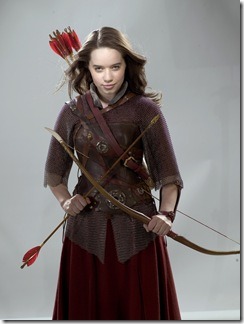
can we take a second to ponder on the fact that a kids movie did lady armor better than the entire film and comic industry
guess who i’m talking about
did you guess? Well you’re fucking WRONG because it’s Susan goddamn Pevensie
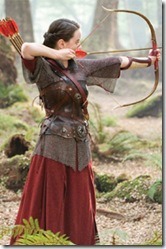
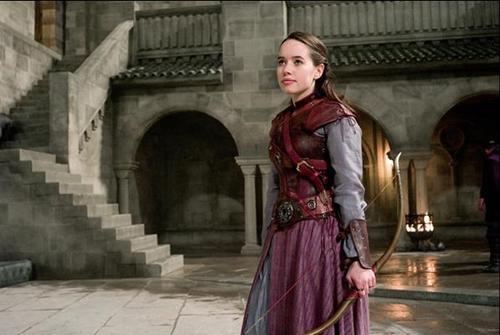
They gave her light armor, appropriate for a small archer:chainmail, an arm brace, chest plate, and a light skirt she can easily run around murderizing dudes in the face in
her hair is also only loose in the promo pictures because Susan is fucking busy not dying because her hair was flying into her eyeballs so she braids that shit back
her mail shirt is also loose enough that it doesn’t impede her arm movements it’s almost like she’s dressed for a fight wow
I like the pinks and purples under her bitchin as hell leather armor here, because you don’t have to be masculine to shoot someone in the goddamn face
it’s barricade day again and what a fine day to remember that jean valjean saved all of les amis and then adopted each and every one of them + eponine and gavroche and pulled javert out of the seine and took his hand to lead him to a life of ohsomany feels and cuddles and a family and happiness and love
Unpopular Opinion: you dont steal your favorite character’s personality traits, they are your favorite character because you share them. The characters bring out the best traits in you.
George very kindly exchanged e-mails with me while I was working on my dissertation, which focused on Enjolras and Grantaire’s relationship in Les Misérables. I basically wanted to see if it was viable to view their interactions as being indicative of something more intimate than friendship, and extended that to examine the reception of their relationship in online fandom, which is where George comes in! He asked to share this interview on Twitter – his answers are great at exploring an actor’s process, as well as being a really fantastic and valuable contribution to what I was writing about; I’m super excited about sharing his thoughts and I hope you all enjoy reading them!
I’m doing a project for school where we have to make a video narrative about an issue. I chose to do LGBTQ+ rights and I need your help.
If you could reblog this post saying “We are real” or “I am valid” or “I am ___ and I am valid” (the blank being how you are a part of the community or if you are an ally) that would be great! This would be the ending to my video. Only my two teachers will be seeing this, but if you don’t want me to show your username that is okay! And you don’t have to be part of the community to do this.
Thank you guys, gals, and nonbinary pals! Please spread this!
Jean Valjean is the master of doing suspicious and/or strange things with really good intentions like he literally broke into people’s houses in the middle of the night and left them money like he does others so many kindnesses but he goes about them in the worst ways omg what an absolute star




 ¯_( ಠ_ಠ)_/¯