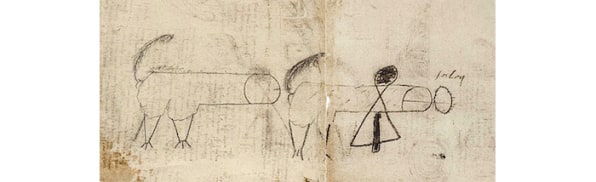
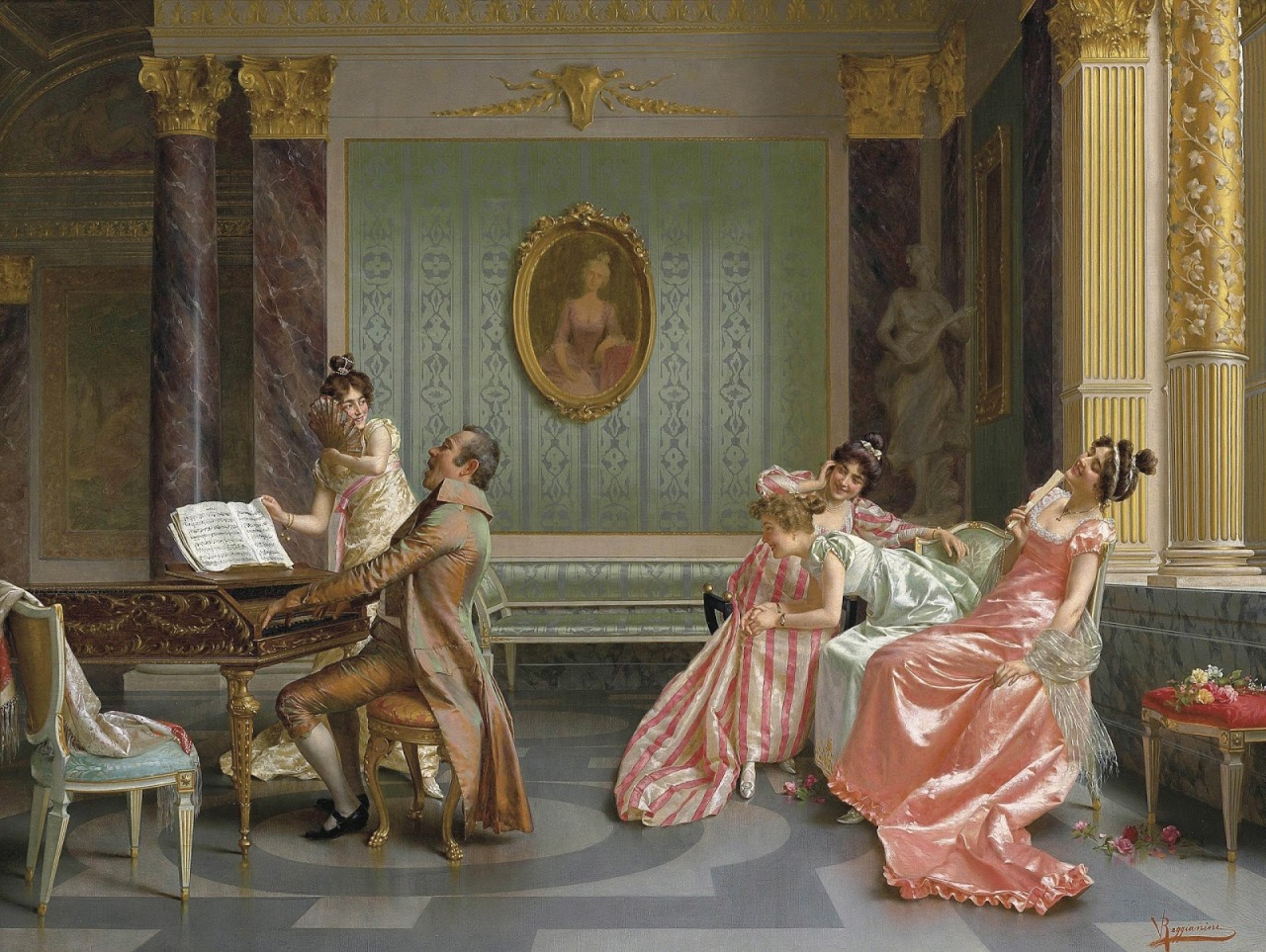
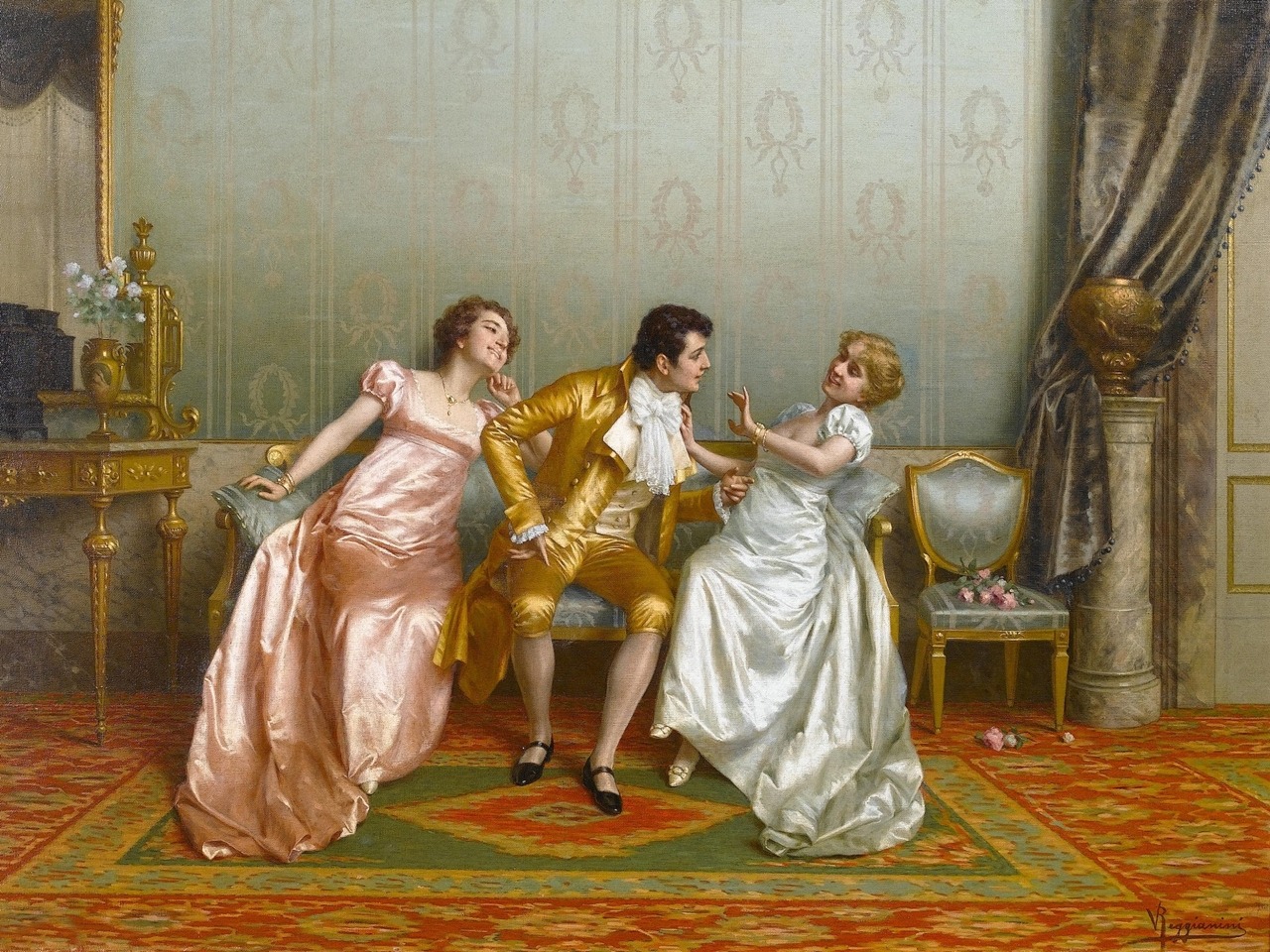
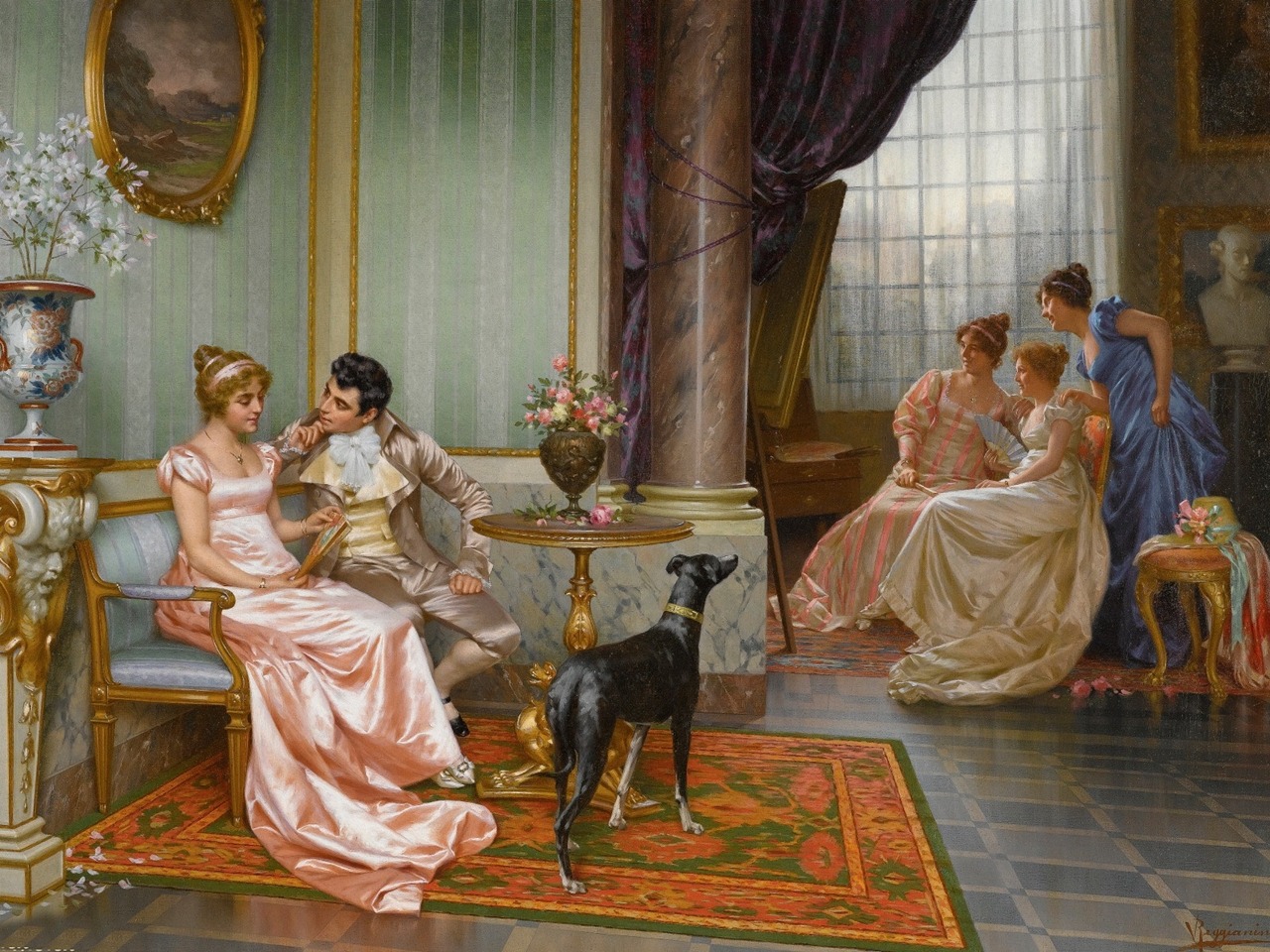
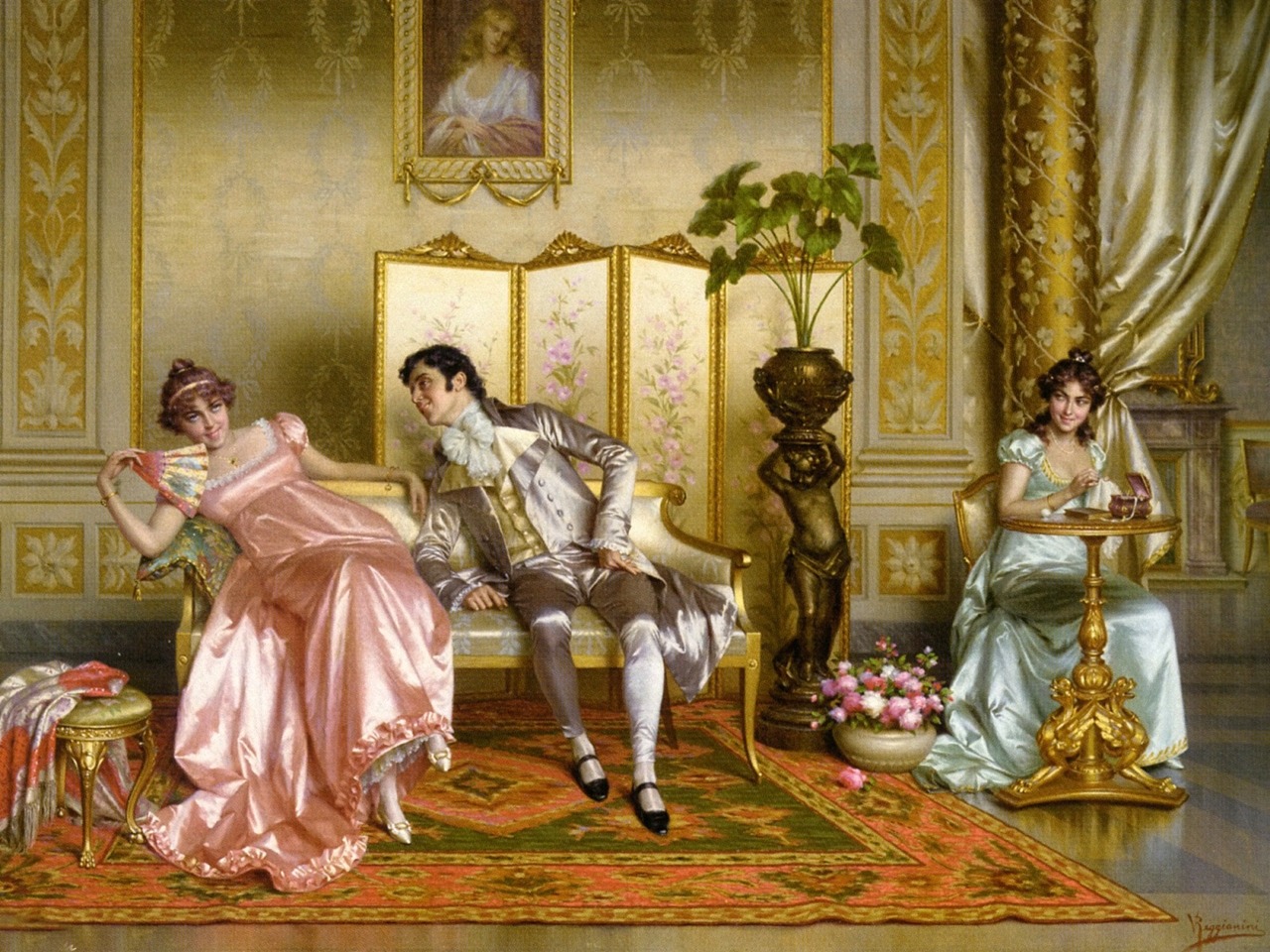
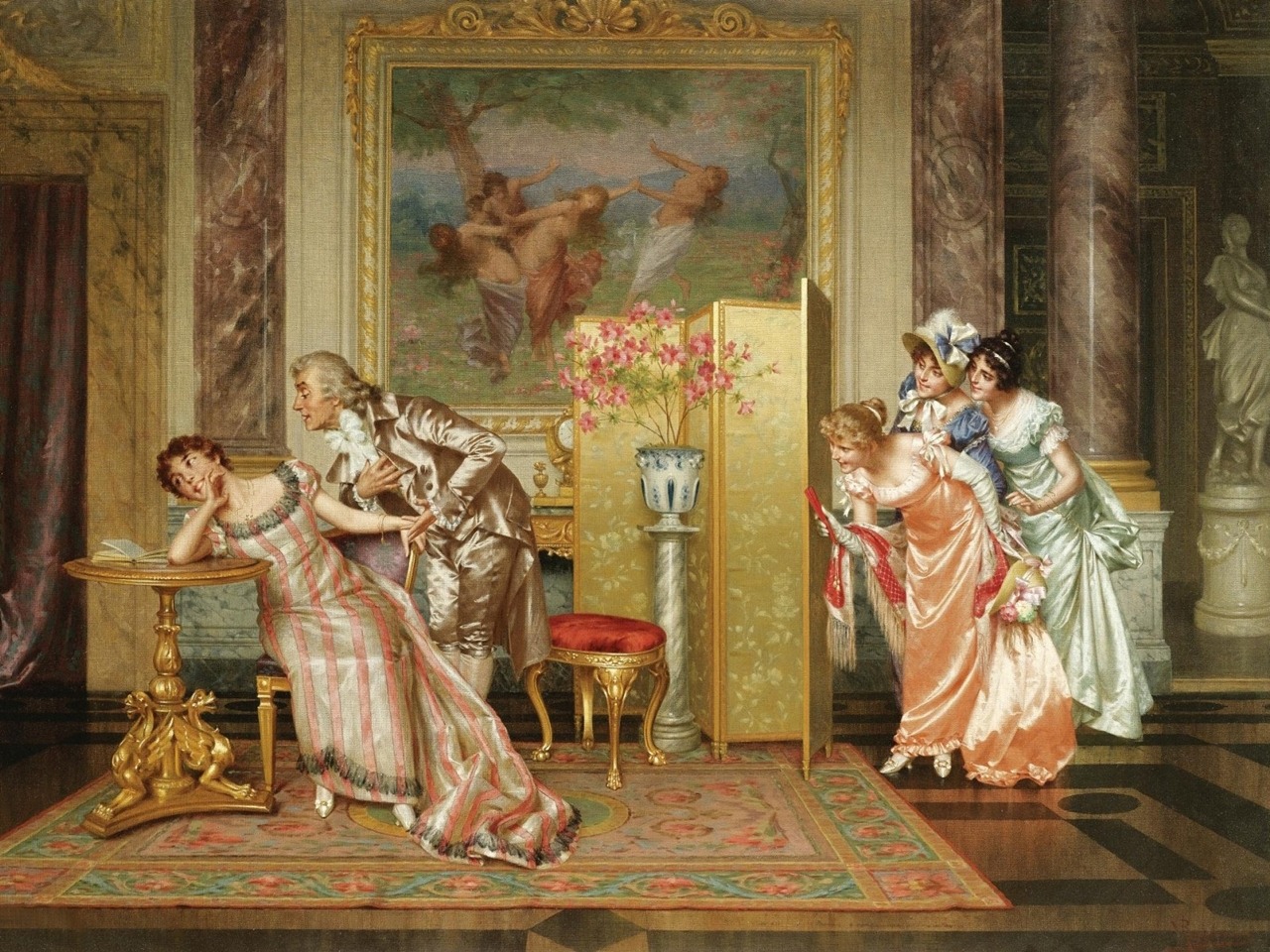
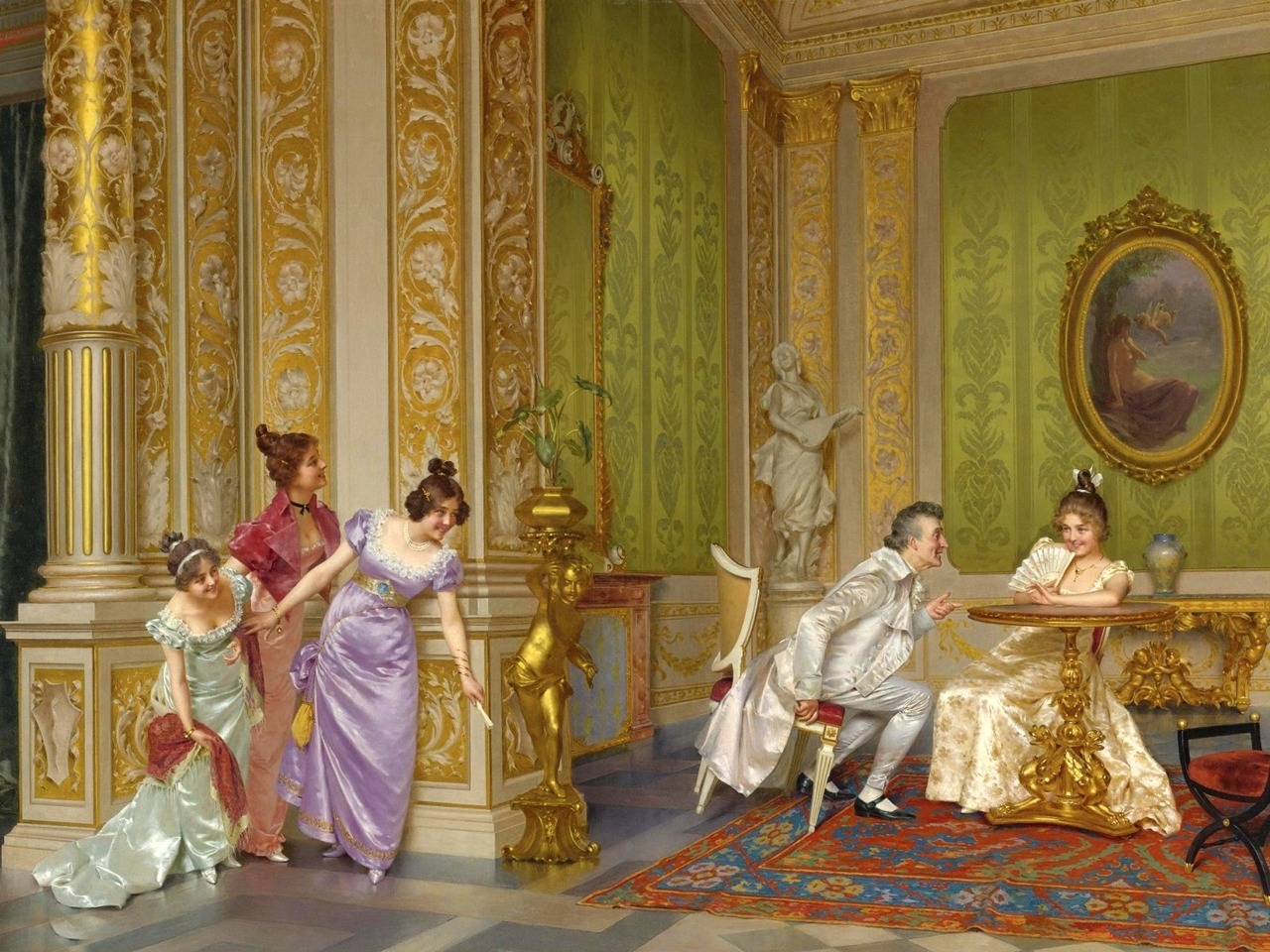
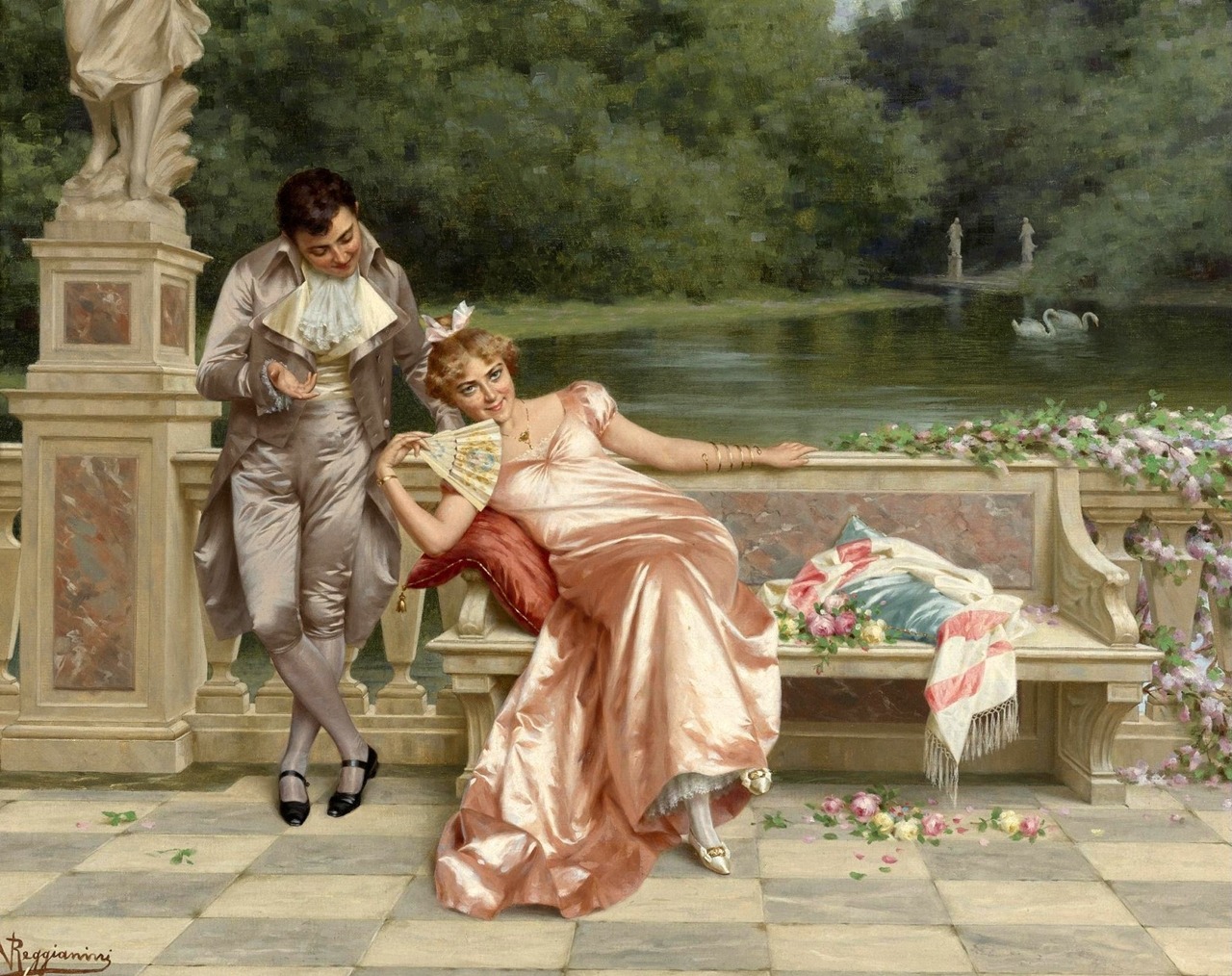
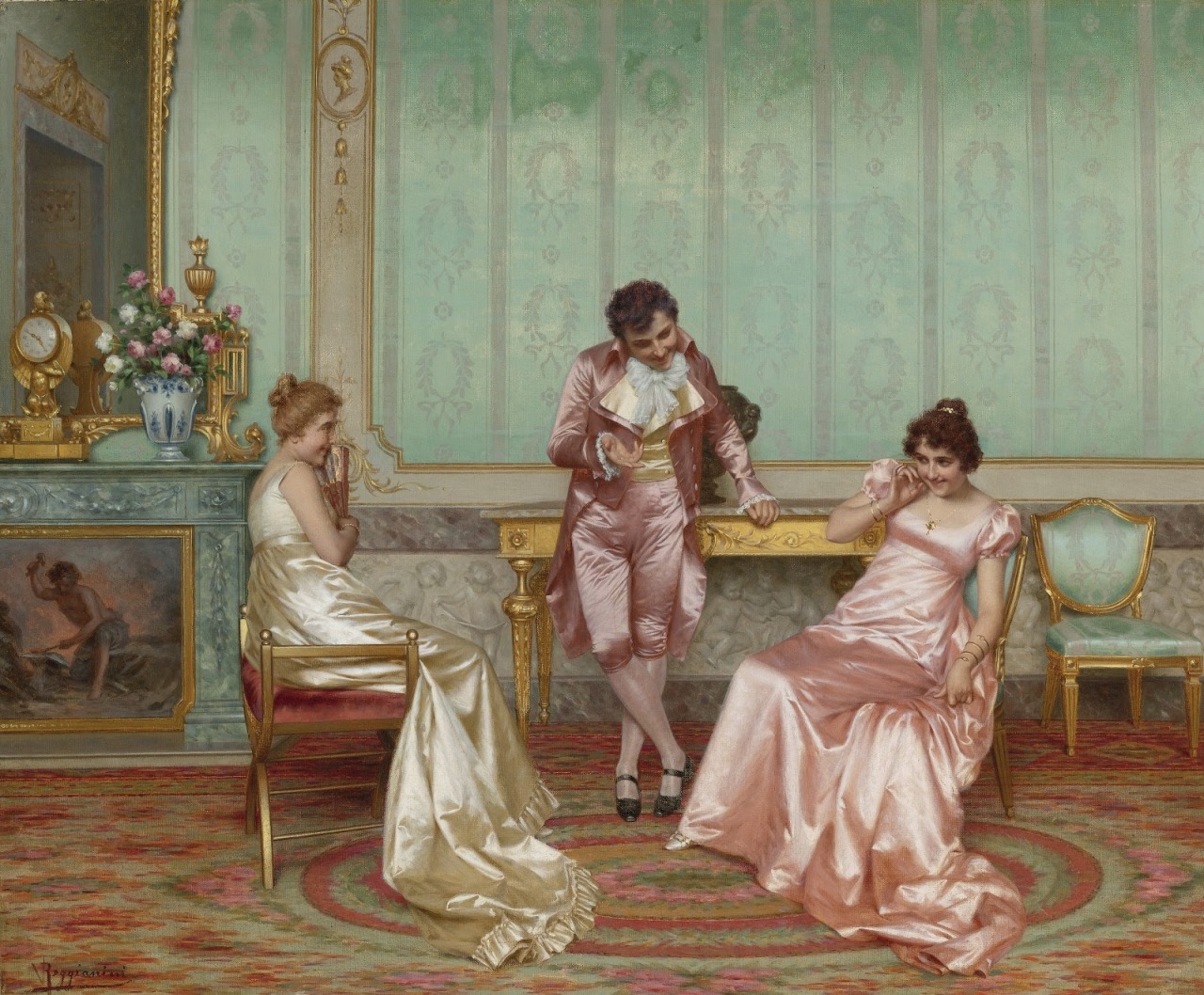
I’ve just discovered my new favorite painter, Vittorio Reggianini – those smarter than myself probably already know of him as an Italian painter from the 1800s who made satin look even satiny-er than satin. I just cannot get over how much he loved painting women who were NOT. HAVING. A. MAN’S. SHIT.
But there was one hottie that everyone seemed to like, and I can’t blame them…
Vittorio knows what the ladies like.
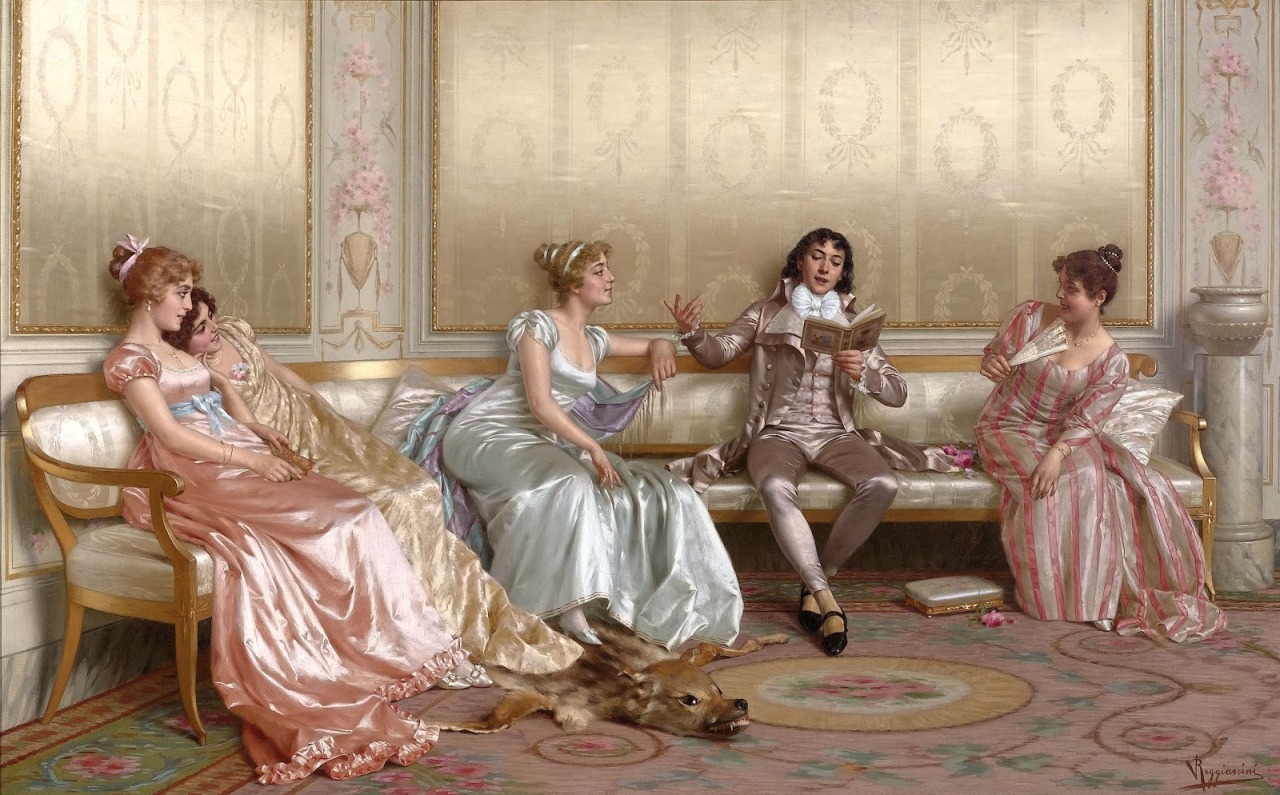
I’m pretty sure that the women in the background of the third picture are looking at a “lewd” painting. They were sometimes kept by upper class homes in the 1800s. They were kept hidden behind a curtain and only viewed for *ahem* “recreational purposes”. So basically, those ladies are looking at porn while their friend blithely humours Bouffant McShinypants.
This dude was an art god at 2 things:
1. Satin
1. Ladies leaning on a chair making a “can you believe this shit?” face
and I’m here to admire both
This looks like the same group of ladies who are constantly chilling laughing at men I love it
Happy Pride Month Eleanor Roosevelt was queer, the Little Mermaid is a gay love story, James Dean liked men, Emily Dickinson was a lesbian, Nikola Tesla was asexual, Freddie Mercury was bisexual & British Indian, and black trans women pioneered the gay rights movement.
Florence Nightingale was a lesbian, Leonardo da Vinci was gay, Michelangelo too, Jane Austen liked women, Hatshepsut was not cisgender, and Alexander the Great was a power bottom
Freddie Mercury is well known for his attraction to men but was also linked to several women, including Barbara Valentin whom he lived with shortly before he died. Friends have talked about being invited into their bed and walking in on them having sex (documentary Freddie Mercury: The Great Pretender)
Marsha P. Johnson and Sylvia Rivera are two of the best-known activists who fought in the Stonewall riots
Baron Von Steuben, a gay man who helped train George Washington’s troops at Valley Forge. [source 1] [source 2] [source 3]
Julius Caesar, a military leader and popular Roman politician who was also a bottom (I mean if he wasn’t a bottom, why else would he have gotten stabbed 23 times?). [source 1] [source 2] [source 3 — a note: this is just stating that the trouble wasn’t the gender of the other person, it was because [Caesar] was the bottom]
Albert Cashier, a trans man who served the Union in the American Civil War. [source 1] [source 2] [source 3]
Elagabalus, a Roman ruler who was presumed to be transfeminine. [source 1] [source 2] [source 3]
Sulla, another Roman general who was not straight. [source 1] [source 2]
Jean-Baptiste Lully, a ballet dancer, and composer close to Louis XIV. [source 1] [source 2] [source 3]
Piotr Ilyich Tschaikovsky, a gay Russian composer. [source 1] [source 2]
(PS. On Freddie Mercury, he was Parsi— Indian + Iranian.)
I am 100% convinced that “exit, pursued by a bear” is a reference to some popular 1590s meme that we’ll never be able to understand because that one play is the only surviving example of it.
Seriously, we’ll never figure it out. I’ll wager trying to understand “exit, pursued by a bear” with the text of The Winter’s Tale as our primary source is like trying to understand loss.jpg when all you have access to is a single overcompressed JPEG of a third-generation memetic mutation that mashes it up with YMCA and “gun” – there’s this whole twitching Frankensteinian mass of cultural context we just don’t have any way of getting at.
no, but this is why people do the boring archival work! because we think we do know why “exit, pursued by a bear” exists, now, and we figured it out by looking at ships manifests of the era –
it’s also why there was a revival of the unattributed and at the time probably rather out of fashion mucedorus at the globe in 1610 (the same year as the winter’s tale), and why ben jonson wrote a chariot pulled by bears into his court masque oberon, performed on new year’s day of 1611.
we think the answer is polar bears.
no, seriously! in late 1609 the explorer jonas poole captured two polar bear cubs in greenland and brought them home to england, where they were purchased by the beargarden, the go-to place in elizabethan london for bear-baiting and other ‘animal sports.’ it was at the time run by edward alleyn (yes, the actor) and his father-in-law philip henslowe (him of the admiral’s men and that diary we are all so very grateful for), and would have been very close, if not next to, the globe theatre.
of course, polar bear cubs are too little and adorable for baiting, even to the bloodthirsty tudor audience, aren’t they? so, what to do with the little bundles of fur until they’re too big to be harmless? well, if there’s anything we know about the playwrights and theatre professionals of the time, it’s that they knew how to make money and draw in audiences. and the spectacle of a too-small-to-be-dangerous-yet-but-still-real-live-and-totally-WHITE-bear? what good entertainment businessman is going to turn down that opportunity?
and, voila, we have a death-by-bear for the unfortunate antigonus, thereby freeing up paulina to be coupled off with camillo in the final scene, just as the comedic conventions of the time would expect.
you’re telling me it was an ACTUAL BEAR
every time I think to myself “history can’t possibly get any more bananas” I realize or am made to realize that I am badly mistaken
Not just an actual bear. A polar bear cub.
Imagine a fully grown man running offstage to be “killed” by a baby polar bear.
There are more surviving images of Antinous than of any other Roman. Hadrian was Extra As Fuck. Can you imagine how many statues of Antinous he commissioned? Get you a man that does That.
And then 1500 years later Victor Hugo came along and was like “Enjolras was Grantaire’s Antinous” and people still be like “they’re friends!” Bitch, Hadrian did not have hundreds of sculptors carving Antinous’ beautiful calves for you to be spreading these lies.
also notable, Hadrian literally created a cult for Antinous after he died
The Pléiade edition for Les Misérables is a 2018 novelty, and since I happen to own it, I decided to share a few pics in case the fandom was wondering was it looked like ^^ ( @flo-nelja@pilferingapples I thought you’d be interested!!) For those who don’t know, the Pléiade is a really elegant edition of books considered masterpieces. Only the most praised authors get their works published in the Pléiade! Of course, Victor Hugo is one of them, and Les Misérables finally made it to a stand alone book. The book may look fairly thin when one knows just how long the Brick is, but that’s part of the particularity of a Pléiade: silky soft paper, so thin you feel like a breeze could rip it. It’s the kind of collector edition you don’t just leave in your bag for months! And though it doesn’t look like it, the book is ~1750 pages long! So, what makes a Pléiade so special, you ask? Let me walk you through it! Unfortunately my mediocre skills in photography don’t do justice to the book, so forgive me for this ^^
pics 1 to 3: As you can see, it’s a hardcover book, with two green fabric bookmarks bound to the book. Nothing really special to it other than the fact that the text is written quite small, in a font unique to the Pléiade, where a small loop bind the ‘c’ or ‘s’ to the letter ‘t’ when they follow each other.
pic 4 and 5: a handful of black and white illustration pages showcase some of Hugo’s drawings for the story. Here, a drawing entitled ‘Miseria’ made for the “frontispiece of the novel”, Gavroche, and Thenardier, as imagined by Hugo!
pic 6: two manuscript pages written by Hugo; notes taken during his research to write “Waterloo”.
pic 7: there are some pages dedicated to drawings, engravings and photographs of the characters! Here, Cosette.
pic 8 and 9: press drawings!! Complete with a small text to make the reader laugh/react! My two favorite drawings read:
[under the flower] Portrait of Fantine
[under the man blatantly wiping tears with a handkerchief] End of Volume I. Here the reader wipes a tear.
pic 10: an extensive note section!! (there is almost 150 pages worth of notes, written in tiny tiny text!) I personally find the notes very helpful, the section was done with great care.
If you read French and are really passionate about Les Misérables, I think you will probably love this edition (though I still keep my pocket edition for notetaking and casual rereading)! But let’s not kid ourselves: the Pléiade remains an elitist and pricy edition, so it can be hard to come upon one. That’s why I wanted to share a few snippets of it!! I hope some of you will find interest in this post. I will gladly discuss it more at length with anyone who asks, my askbok is always open. So if you have a question in mind, feel free to drop by! 😀
!!! you were very right that I’d be interested! This edition is a Dream Book 😀 I’d love to hear more about any neat info you found in the notes!
This is the greatest progression of events I have ever read, where’s my historical gay romance novel about this
KING JAMES, CAN YOU CHILL?
Local King Cannot Stop Promoting His Boyfriend
where’s the lush period drama about this series of events?
fun thing about king James, this guy was fairly public about his bf (more public than what was acceptable). He threw lots of extravagant parties with his man on his arm. It pissed off the church obviously so to get them off his back, he’s the one that ordered the third translation of the Bible from Hebrew to English (the King James Version aka the Authorized Version) so the Bible every hot blooded all American Christian reads today was literally just written so a very gay king could fuck his boyfriend in peace.
oh my god this is hilarious
“guys, guys. I know this looks kinda gay, and i promise i have a good explanation for all this, but have you considered… that jesus… is also gay? checkmate, heteros.”
Anyway, if you read marriage certificates from church records, a full 85% of first marriages for young women were around 18-19 years old. The rest skewed higher, into the early twenties, with only a few being below that age and only one in a thousand was younger than 16.
The age of puberty has declined over the centuries as girls get better nutrition, as well, so throughout the middle ages the age at which a girl could expect her first period was around 16, where modern girls often get it much younger.
The idea that women in earlier ages were married and mothers in their early teens is a myth. Marriages of children were usually only between noble families, and made for political reasons, or creepy old bastards who wanted a child-wife and could get away with it because they were rich and powerful. They often would point to the fact that the Roman elite did the same thing as justification. The Romans, of course, would point to the Greeks doing the same thing as justification, the Greeks pointed at the Assyrians, and so on back through the ages.
It was considered disgusting by normal people then and still is.
This myth is still brought out and touted by sick fuckers. Know it for what it is; a falsehood.
And EVEN among the nobility marriages at such a young age were a much rarer occasion than those apologists would make you believe.
Let’s look an an egregious example, Henry the bloody VIII:
First marriage:
He was 18, Katharine of Aragon was 23.
Second marriage:
He was 40/41, Anne Boleyn, depending on which theory you believe, was anywhere between 24 to 32.
Third marriage:
He was 44, Jane Seymour was 28.
Fourth marriage:
He was 48, Anne of Cleves was 25
Fifth marriage:
He was 48, Catherine Howard, depending on which source you believe, was between 17-22. And yes, people at the time actually were squicked out by this age difference. And rightly so.
Sixth marriage:
He was 51, Catherine Parr was 31.
Even the most notorious LECHER and WIFE MURDERER in history did not marry teenagers in at least 5 if not 6 out of 6 marriages.
And here’s another Tudor tidbit, both Henry VII and VIII knew how traumatic and damaging it is for women marrying/having children too young. Henry VII’s mother was married at 12 and gave birth to Henry VII at 13. It caused so much damage and trauma that she never had another child after him despite being married three times.
So yes CUT THAT SHIT OUT. Teenage girls are NOT adults and anyone preying on them is pure evil.
YOU
I LIKE YOU
And as for the marriage of Elizabeth Woodville to King Edward IV, she was 27 at the time. He? Was 22.
She had been married before, and did marry young…at the age of sixteen or seventeen, to Sir John Gray, who was about five years her senior.
@systlin This is good information, but do you have a source for the information about how most marriages back in the day were not actually usually from a younger age? I tried Googling it but I can only find things talking about modern day issues.
Well, if you don’t want to spend months crawling through digitized copies of marriage records preserved in church archives from the 12th through 18th centuries from England, Italy, Germany, France, ect (which you can do, and it will show you I’m right) you can go read
“
Medieval Households” by David Herlihy, Harvard University Press, 1985. He did the archive crawling for you.
Also
Peter Laslett’s book “The World We Have Lost”, where he details over a thousand marriage certificates, and he dug through many more in the writing of the work.
Wait. I am spanish. Do they actually think henry/enrique VII married fucking katherin/catalina de Aragón as a teenager?
You know we see films about this in school and every one is pretty much adult there, both fisically and in the story.
There’s this…really weird trend in a lot of pseudo-European fantasy/ ‘historical’ books to have girls marry like…really young, to vastly older dudes. Like at about 13, getting married off to like 30 year olds. And then say “Well that’s what it was like back then.”
(Sideyes G.R.R.M)
And…no. No it wasn’t. That’s gross. England was creeped TF out when Henry VIII married Catherine Howard when she was between 17 and 22 and he was 48 as stated above, and rightly so.
All of this is excellent, and there is one thing I would add:
When you DID have these super-young marriages between nobility, it was more or less the same thing we do today when we scream “DIBS!” over who gets the TV remote. You might have a 13-year-old lord marrying a 14-year-old girl, but they weren’t expected to actually act as husband and wife, not yet. He had schooling to finish, she had to learn how to run a household. The union was purely political and not to be consummated until later–you know, at a point when they were 18 or 19 and she could carry a child without dying of it and he could actually support a wife.
I think one of the major causes of many misconceptions like this is because people have been basing their preceptions on life in the past off of works of FICTION written in the past. When I was studying Early Modern literature in undergrad, this topic was brought up regarding the presence of sexual abuse. There were many plays and what not that implied things such as this, however the scene in the play WAS CONSIDERED SHOCKING to people back then too. It would be like someone 500 years from now watching some grimdark noire mopey antihero cop drama in a city of sin, and then thinking that it demonstrates what the everyday life of today’s world is. No one in this thread is saying things like that NEVER happened back then, it was just… not as common as historical fiction and fiction written 500 years ago might have you believe. As OP mentioned, historical documents from the time have far fewer child marriages and sexual abuse than literary works from the time do.
Rebloging for A+ history.
We were just talking about child marriages today, so reblogging for history.










 ¯_( ಠ_ಠ)_/¯