millenial from the year 1910: the moving picture show has fucking destroyed my sense of humor like i only laugh at shit like this now *video of a clown throwing a pie at the hoity toity town mayor*
millenial from the year 1010: the king’s court jester has fucking destroyed my sense of humour like i only laugh at this shit now *jingles stick puppet of the king’s face with bells attached and gets sentenced to death for mocking his majesty*
He was afraid of rabbits and open doors (he used to make everyone following him go single file through a door barely open enough to get one person) (then immediately closing it after them)
he only ate in complete silence? and made it illegal to name a pig napoleon in france (fun fact: this is STILL illegal in france, and is why in the french version of animal farm the pig is called caesar instead!)
Careful with your Napoleon facts – you don’t want the rest of tumblr falling in love with you then try to marry you!!!
I have a poster of Napoleon in my room, but don’t start calling me Marius just yet! Allow me to explain. I was inspired by the ancient Egyptians, who would put images of their enemies on the bottoms of their sandals so with every step they metaphorically ‘crushed them’. My poster is right behind my door, so not only can you not see him half the time, every time I leave or enter my room I hit Napoleon in the face with my door. It’s great.
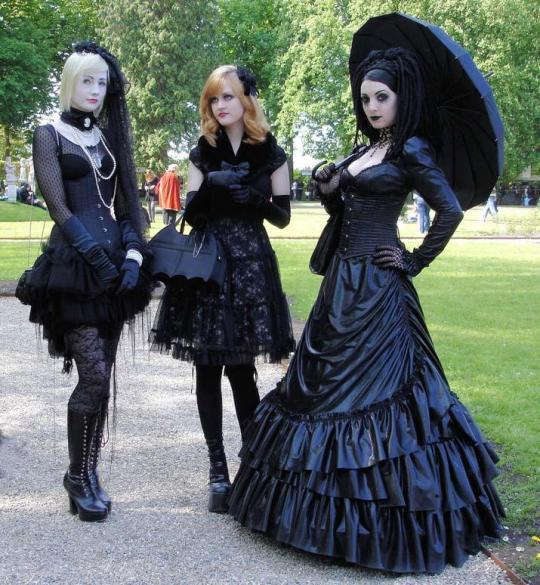
Is there any word that’s had a wilder evolutionary path than “gothic”?
Seriously, it went from meaning this:
to this:
to this:
and finally ended up as this:
You go you funky word, keep on trucking.
There’s a good reason for that!!!
Here’s an explanation literally no one asked for, and OP probably already knows, but I like talking about all my hyperfixations, and this covers like four of them. (Now, I’m going off the top of my head and its been a few years since I took an art history class) but the jist of it is that the “new” cathedral style that ended up being called Gothic, was called so, because the flying buttresses and pointed arches, and other pointy, overdramatic details were considered kind of barbaric compared to the older style. I want to say this was the point where cathedrals went from being ‘ornate’ to ‘dear god what the fuck are you even doing?!”
So basically we have gothic as this word that means, big and old and overdramatic and vaguely threatening. Which goes perfectly with the mood needing to be set by authors who place characters dealing with a crisis of faith, or a crisis of morality, in this big old mouldering expansive tomb of a house that represents everything of the distant past and the dark secrets rotting the foundations of polite society. But…the Victorians worshipped the austere version of the greeks and neoclassical, and all that neat white marble. But also an austerity as far as people went, there was this Christian ideal to aspire to.
So the decrepit tomb aesthetic, the doom and gloom and the decaying manor house, The Fall of Usher thing, it was popular for the same reason anything creepy is popular now. That love for the morbid and forbidden has never not existed. I mean…Bram Stoker’s Dracula was a best seller when it come out because it had all of the above and THEN some.
So far we’ve got Gothic as old and decaying and overdramatic and threatening but also kind of sexy (see gothic romances, or the use of gothic romance/gothic horror to explore Victorian fears and anxieties about sex and death and immorality).
Fast forward to the late 1970s when Siouxsie and the Banshees distilled that into a look and a performance. They were a punk band, but Siouxsie dressed like a vamp, she had the Theda Bara makeup and wore Victorian lingerie on the outside, but also fishnets and pointy boots. She was the femme fatale. She had the sex and death of both Vampira and Theda Bara, but her and the band had the theatrics of Screamin Jay Hawkins. A journalist described their music as gothic, as an insult, and exploded outward from there. But…they weren’t the sole band to be described this way, or necessarily the first to sound like that or dress like that. But they had enough of all these things to have that word linked to them. And their fans, and The Cure’s fans, and Sister’s of Mercy’s fans, and Bauhaus’ fans, created the subculture and look that we call Goth now. And much of the look has fanned out and expanded from years and years of the world’s most dramatic people trying to outdo each other at the club.
That’s how we got from A to B. Thanks for coming to my TED talk.
So what you’re telling me is that “gothic” really just means “extra.”
Everybody talks about Anastasia, which is a shame, because it’s a far less interesting example of Russian fake heir drama than that whole business with the False Dmitries.
Okay, so Ivan the Terrible’s youngest son,
Dmitry, was assassinated in 1591 at the age of 8. Fast-forward nine years, and there’s a guy going about Eastern Europe claiming that he is Dmitry, having secretly escaped the assassination attempt and lived in hiding under a false identity ever since. This sort of business isn’t too unusual, but this guy actually pulls it off, managing to gain the Russian throne and rule for nearly eleven months before being dragged from the palace and publicly executed in early 1606. He’d subsequently go down in history as False Dmitry I.
Here’s where it gets interesting. In mid 1607, a second impostor declares himself. Bizarrely, this one doesn’t dispute the first impostor’s legitimacy; instead, he claims to be the same guy, having miraculously survived his apparent execution the year before. He somehow wins the political support of False Dmitry I’s widow, and with her vouching for his identity, he gains the allegiance of the Cossacks, rallies an army over 100 000 strong, and tries to “take back” the throne. Though his march on Moscow ultimately failed, he successfully conquered most of Southeastern Russia, which he would rule until his untimely death in December of 1610, when he was beheaded in a drunken altercation with a Tartar prince. The history books know him as False Dmitry II.
Now jump ahead three months to March of 1611, when a third fucking impostor pops up. Dude apparently just magically appeared from behind a waterfall in goddamn Ivangorod and declared himself Tsar. Following the lead of False Dmitry II, he doesn’t dispute either of the two previous impostors, instead claiming some sort of spiritual reincarnation and/or magical resurrection – it’s not entirely clear which – to establish himself as the same guy. He must have talked a good game, because he managed to win the support of the same fucking Cossacks who supported False Dmitry II’s claim. Unfortunately, he was a far less able commander, being forced to flee his stronghold only a year later, whereupon he was spirited away to Moscow and secretly executed. Though he never managed to actually rule anything, historians decided to stick to the theme and dubbed him False Dmitry III.
At this point the historical record becomes confused, with some sources asserting there was a fourth False Dmitry, though others insist that the third False Dmitry was simply counted twice due to poor record-keeping. Still, whether we’re talking about three False Dmitries or four, imagine the whole mess from the Tsar’s perspective. Dude just wouldn’t stay dead!
what you’d think the ancient roman republic’s political system is like: a complex but generally functional collection of politicians working together to help rome thrive; after all, the romans took great pride in their republic!
what it’s actually like (roman millionaire voice) mom said it’s my turn on the consulship
if u ever feel like u have really weird and specific and intense obsessions, i think you’d benefit from learning about this book i found in the library today
seems like it’s prob a normal book and weasels are a metaphor for something ? right ? like ? that’s what you’d think ? but no; no, look:
it’s literally about women and weasels. women and weasels throughout history. it’s a long, scholarly book about women interacting with cute furry rodent slinkies throughout history
i love you, maurizio bettini, whomever you may be. you keep doin you.
yo whatever happened to gladiators n coliseums n shit? when did we decide that blood sports were bad? im tryna see two men kill each other on pay per view
dont worry im a feminist id pay to see two women kill each other as well
political correctness killed the gladiatorial arena and its disgusting. fucking millennials (400 AD)
gladiators were actually very skilled and expensive to train (not to mention charismatic and popular), so they rarely fought to the death actually; it was more of a… ritualized theatrical combat
the modern equivalent you’re looking for is professional wrestling
Ok but when are professional wrestlers gonna be throwing nets and shit and using swords???
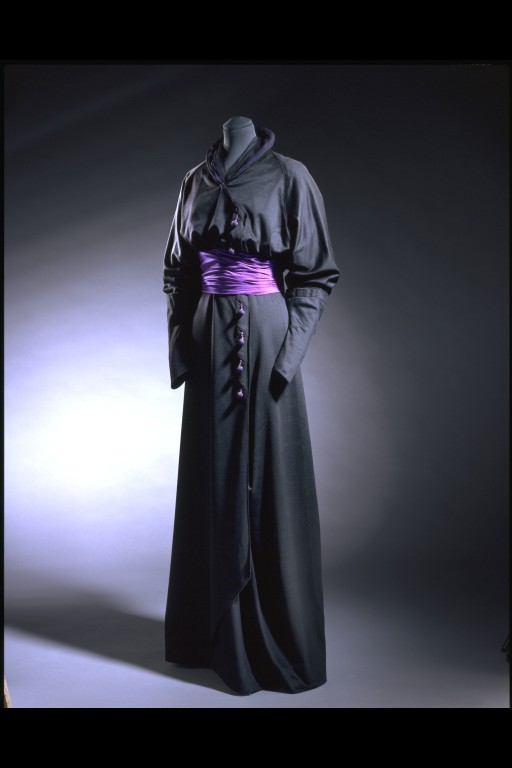
What’s a “half-mourning” dress? Mourning in the front, party in the back?
Half-Mourning was the third stage of mourning for a widow. She would be expected to mourn her husband for at least two years, the stages being Full Mourning, Second Mourning and Half-Mourning. The different stages regulated what they would be wearing, with Full Mourning being all black and with no ornamentation, including the wodow’s veil, and the stages after that introducing some jewellery and modest ornamentation. When in Half-Mourning you would gradually include fabrics in other colors and sort of ease your way out of mourning.
Wow, I am happy you made that joke so I could interpert it as a serious question and have an excuse to ramble on about clothing customs of the past, I am a historical fashion nerd.
That’s very informative, but I’m going to stick with my original head canon:
I love both the informed fashion history and the hilariously off-the-wall halves of this post.
perfect timing for this post showing up but Mr. Sax invented a bunch of other instruments (including ones that had a run but didn’t really stick around) but y’all wanna see one of his failed inventions?
behold, the fucking valved trombone
That’s not an instrument, that a section of plumbing






 ¯_( ಠ_ಠ)_/¯