
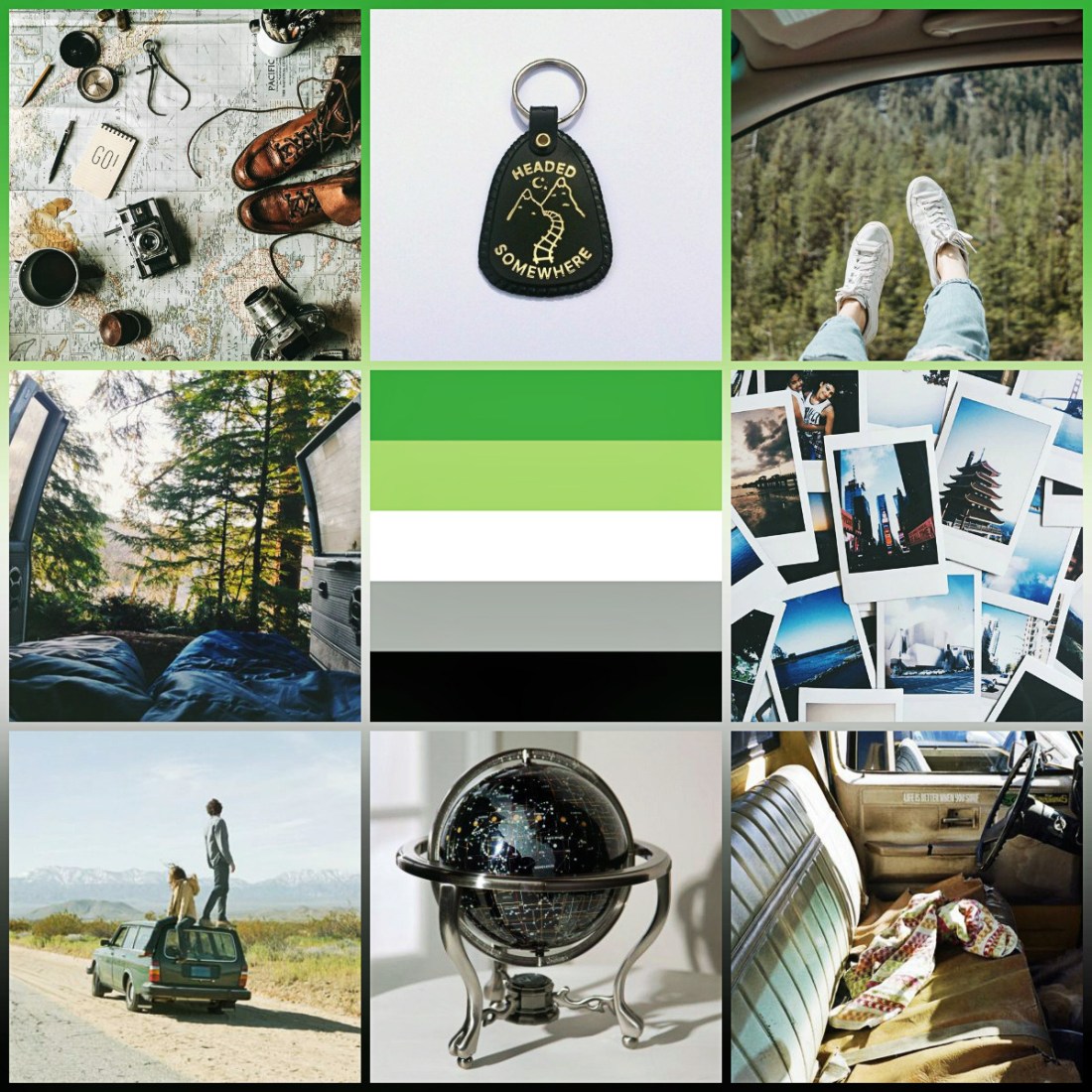
Aromantic forest guardian aesthetic for anon!
(forest aro flag by @aroaesflags!)

Reblog the aroace scarab for 4000 years of luck and protection from the discourse!
No age is to late to come out
You’re 30+ and just realizing your queer? Great dude absolutely stellar
It’s okay to love that you are ace/aro, and it’s okay if you’re still learning how





This post came across my dash and I had a Feeling so I made things.
top right corner is an aro flag redesign, middle left is a new lesbian flag
there is no middle ground that i can see. if just believing people about their own sexualities and identities is problematic to you, then you are supporting medical gatekeeping, you are agreeing with the straight and cis people who deny each of our identities regularly. if you don’t support medical gatekeeping, then believing people’s self-reported identities is your only option.
you can not pick which identities are real and which should be subject to medical scrutiny and examination. you do not have that right. you either believe us or abuse us.
Daily reminder that it’s okay if the labels you use to describe your identity change. You change and fluctuate as you grow; some things may remain the same, while some may become different.
Just because you used to go by a certain label and you don’t anymore doesn’t mean you were “faking it.” If that label fit you and was what you felt comfortable identifying with at the time, there’s nothing wrong with that.
You might still be figuring things out, too. Figuring out who you are is hard, and you don’t have to put a specific label on yourself if you don’t want to, either!



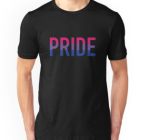
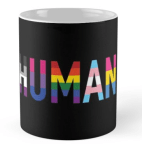


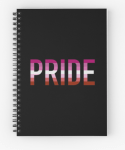
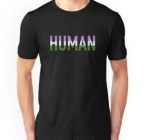
Since this design was stolen by Target, here’s some merch by the actual artist, @skylerxiii, to consider instead.
Please support LGBTQ+ artists. And don’t steal art.
❤️💛💚💙💜






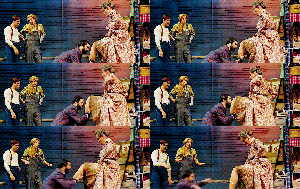

For the 75th anniversary production of Rodgers and Hammerstein’s Oklahoma!, she loves her and he loves him!
Rodgers and Hammerstein’s musical Oklahoma! was revived by the Oregon Shakespeare Festival with LGBT+ Casting. “This revival made the musical’s primary romantic couple, Laurey and Curly, lesbians. It made the comic sidekick couple, Will Parker and Ado Annie, gay men (with “Annie” renamed “Andy”). It’s not just the two romantic couples in the show who have been reimagined. Laurey’s starchy yet sometimes playful Aunt Eller will be a transgender woman (portrayed by a transgender female performer). Ali Hakim will be a bisexual man who has a great fling with Ado Andy, but winds up married to a young bi woman named Gertie Cummings (who also fell in love with Curly). The director, Bill Rauch, felt Jud needed to stay a troubled straight man who, with no changes to the book, is angry that Laurey prefers a woman instead of him. “We wanted also to make sure that the world was not just LGBTQ-inclusive, but that it was clear that this was a community that was thriving, because there are straight allies. They are choosing in this small rural corner of Oklahoma to make a community that is inclusive and that is loving.””
Major changes to a show must be approved by the copyright holder. "Ted Chapin protects the catalog of Rodgers and Hammerstein with great ferocity, and at the same time, he understands the way great classics remain relevant is through thoughtful expansion and reinvention and experiment. So, I was really, really honored — not only to get the permission in general, but the fact that this is the 75th anniversary of ‘Oklahoma!‘
The story of the Tony and Pulitzer Prize winning Oklahoma! centers around Laurey and Curly, who are in love but are too stubborn to admit it to one another. A troubled farmhand, Jud, will do everything in his power to make Laurey fall in love with him instead. "I think this casting really excels in the love song ‘People Will Say We’re In Love,’ a beautiful love song that Laurey and Curly share, but their fear that people will say we’re in love takes on a completely different resonance and a completely different depth when it’s sung by two women, and the courage that it takes for these two people then, you know, finally when they sing, ‘Let people say we’re in love.’ The audience just cries and cheers, because it’s an affirmation in a completely different way.
Sources: x / x / x ll Official Production Page
 ¯_( ಠ_ಠ)_/¯